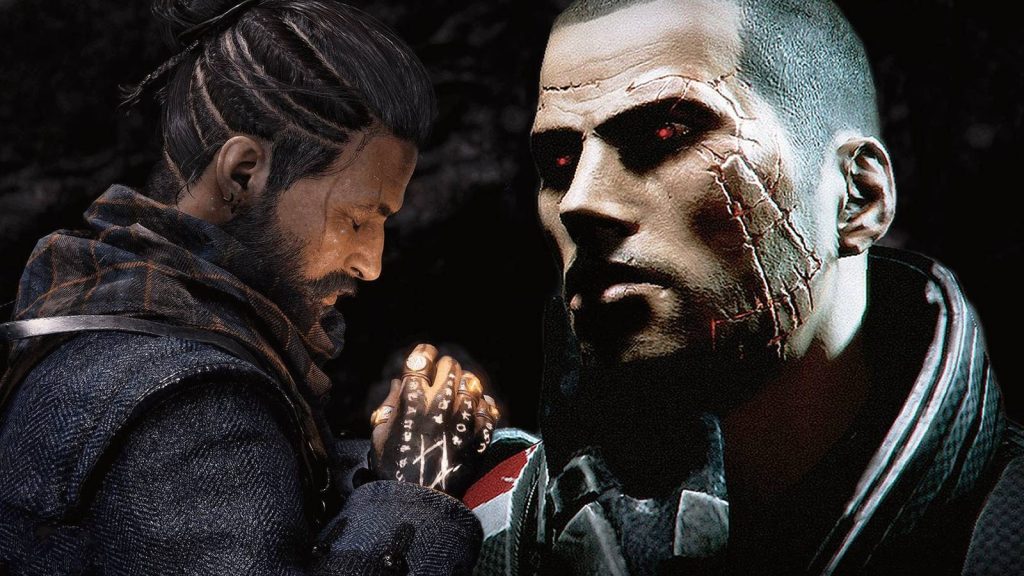
Once popular in the genre, the full-fledged morality system that judges your actions and awards special points is a pretty rare guest in modern RPGs. Today, it’s more common to leave such judgments to your own conscience, allowing more flexibility in your choices and the character you want to become. Earlier RPGs, though, often placed morality systems at their foundation, with the Mass Effect trilogy being one of the best-known examples.
From Knights of the Old Republic to Jade Empire, BioWare repeatedly experimented with morality systems and opposing alignments. Mass Effect took a step toward more complexity, offering separate meters for Paragon and Renegade actions rather than a shared scale. Especially in the earlier entries, sticking to one approach could unlock extra persuasion or intimidation options. Later games also added action-style interrupts that let Shepard put that attitude into practice during dialogue and cutscenes.
For all its popularity, it’s hard to call Mass Effect’s morality system one of the best, and today’s RPG selection aims to prove that. The games below use morality in various ways, tracking your behavior, letting you develop beliefs that matter, and allowing you to influence companions, shape the story, or even change the world around you based on the person you become.
7
Fable 2
Morality Extends To Your Lifestyle And Appearance
Fable’s Good/Evil morality system is probably among the most recognizable in gaming. Its exaggerated nature literally lets you grow hellish horns or obtain an angelic halo, and the citizens of Albion react accordingly, either running away in fear or cheering for the saint before them. Unlike Mass Effect, you can’t hide your morality in Fable; whatever kind of hero you become, the world makes sure you wear it on your sleeve.
Fable 2 pushes the original’s system further by introducing an additional axis of Purity and Corruption. This tracks different aspects of your daily behavior and economic temptations, including smaller decisions like rent and shop prices. As a result, the sequel offers more complex combinations, like a good but corrupt person who helps people through quests but exploits them in day-to-day life. Still, its exaggerated nature, obvious binaries, and deliberately simplistic judgments keep Fable 2 below some more serious RPGs in this aspect.
6
Banishers: Ghosts Of New Eden
Personal Goals Can Corrupt Your Judgment
Banishers: Ghosts of New Eden takes a different approach, offering two opposing goals that shape your playthrough and ending. When Red mac Raith loses his beloved Antea early in the story, the game tempts you with bringing someone you love back to life. Banishers places an ultimate choice in front of you: would you abandon your principles as a Banisher to resurrect your love, or respect your credo and ultimately let her go?
Banishers doesn’t award morality points, but its haunting cases repeatedly tempt Red to find someone guilty, because sacrificing the living feeds his personal goal. Cases can end with blaming a settler, banishing a ghost, or helping it ascend, at times delivering complex situations where deciding who deserves punishment is really tricky. While Banishers explores how a personal goal can corrupt your judgment, it’s easy to choose your position and stick with it for the rest of the playthrough, without anything really challenging your views.
5
Triangle Strategy
Your Beliefs Must Survive Disagreement From Companions
A very interesting alternative to RPGs where the protagonist personally decides every major outcome, Triangle Strategy asks your principles to survive a group decision. The game tracks three sets of values: Utility (practical benefits), Morality (ethical principles), and Liberty (individual freedom). Your choices strengthen these convictions, influencing which allies join your cause and how easily you can persuade them. Party members aren’t passive pawns; major decisions go to a vote, and companions with different beliefs may need convincing.
These values stay hidden on your first playthrough, so you can’t simply follow a visible alignment meter. Instead, your past behavior, the arguments you choose, and information gathered through exploration in Triangle Strategy affect your ability to win people over. Collective decision-making is the heart of the experience, so having the final say is something you have to earn. Failing to secure your preferred outcome can send the party toward different story branches, alliances, and even endings.
4
Star Wars Knights Of The Old Republic 2: The Sith Lords
Become A Jedi Or Sith Teacher For Your Own Followers



Building on BioWare’s original game, Star Wars Knights of the Old Republic 2: The Sith Lords also lets you choose your Force alignment. What makes its morality particularly interesting, though, is the added Influence system, working alongside the Light/Dark Side meter. Conversations and actions can gain or lose influence with companions. This goes much deeper than unlockable romance options. You can shape companions’ beliefs, alter their alignment, manipulate them, and train several as your own apprentices, changing their combat classes and unlocking new abilities. Too bad you can’t train droids or a Wookiee, though.
In contrast to Triangle Strategy, morality here becomes something you spread through your party, with meaningful effects on character development, personalities, and combat tricks. Even your personal lightsaber crystal changes with your alignment, gaining new properties based on the character you become. Another vital layer of KOTOR 2 is Kreia, your teacher and advisor, who constantly questions your motives and decisions in unexpected ways. No matter what you choose, Kreia can seemingly always find weaknesses in it, adding an intriguing self-reflective layer.
Scratch & Peek

Identify the cover art while scratching off as little foil as
possible.
3
Vampyr
Caught Between Duty And Desire
Vampire-focused games are a natural fit for exploring complex morality and the pressure to succumb to bloodlust. The Blood of Dawnwalker also explores this layer, but it still doesn’t hold a candle to Vampyr, one of the best examples of morality imposing an actual gameplay cost. Mirroring Banishers in some ways, Jonathan Reid is caught between his duty as a doctor and his urge to consume blood to grow stronger, seeking out those who most deserve death. The game repeatedly tempts you to compromise your principles.
In Vampyr, the citizens you can feed on are named characters with their own stories, so deciding whose life is expendable can be tough and carry far-reaching consequences. What’s more, treating someone’s illness first makes their blood more valuable, so your work as a doctor can become preparation for feeding. Killing people also affects their relationships and the district’s health, potentially costing you shops, quests, and entire communities. Refraining from killing citizens is an option, too, and unlike in Banishers, it’s much harder to stick to. Mercy has a practical cost, slowing progression to a fault.
2
Undertale
Even Basic Combat Encounters Carry Immense Weight
Perhaps the most radical alternative to Mass Effect, Undertale is an unforgettable experience that makes morality part of almost every encounter. The game responds to how you treat its inhabitants during ordinary combat, where mercy is always an option. You can interact with enemies in unique ways, finding alternatives to killing them. Violence makes you stronger, so even the most basic RPG leveling loop becomes part of the moral argument.
Killing or sparing enemies changes dialogue, progression, boss encounters, story routes, and endings. Mixed behavior leads to different Neutral outcomes, while True Pacifist and Genocide routes demand more than simply being nice or aggressive. And don’t assume you can outsmart the game by starting over. Some characters remember earlier actions, while completing a Genocide run can leave consequences that alter later endings even after an in-game reset. Undertale makes it uncomfortable to treat its inhabitants as disposable obstacles, even when you think you can undo the damage.
1
Tyranny
Evil Has Won, So What Kind Of Evil Are You?
Another underappreciated Obsidian RPG that sadly never got a sequel, Tyranny offers one of the genre’s strongest combinations of moral ambiguity and mechanics that encourage replayability. Set in a world where evil has already won, the game builds on the Obsidian’s earlier takes on morality with two relationship systems: factions track your Favor and Wrath, while companions respond through Loyalty and Fear. Even though it looks awfully similar to KOTOR 2 at first, these aren’t opposing ends of a single scale. A companion can be both loyal and afraid. A single action can have far-reaching consequences and mean different things to various groups.
Those relationships don’t neatly translate into playing right or wrong. Each can have its benefits, unlocking different interactions and stronger abilities. Being feared by your followers can be just as interesting to explore as winning their loyalty, with different rewards depending on your treatment of them. Tyranny challenges familiar moral judgments from the outset. Mercy can be treated as weakness, while obedience, justice, and cruelty can be very hard to separate in this twisted world.