The Like a Dragon franchise, formerly known as Yakuza, is no stranger to wild spin-offs that feature some unique adventures and settings. Everything from serious thrillers investigating crimes to wild, yet non-canon stories about making your way through a zombie outbreak has adorned the beloved franchise.
Now, Sega and developer RGG Studio are back, with the latest spin-off to release in the series, Stranger Than Heaven. The newest game does something no Like a Dragon ever has, and takes players to a time never before explored: early 20th-century Japan. Besides an entirely new era of Japan to explore, Stranger Than Heaven aims to change how you interact and play inside the Like a Dragon world, including how you fight, interact, and even in things like franchise favorite minigames.
Earlier this month during New York Comic Con weekend, we got the chance to check out an early look at Stranger Than Heaven. After just a little while of exploring various parts of the game, it’s clear that RGG Studio wants players to feel like they’re setting foot in something they’ve never seen before.
Exploring the Beginning of Like a Dragon’s Giant World
As noted above, the Like a Dragon series is a long one, and spans tons of games and years inside of those games, which makes determining how Stranger Than Heaven fits in a bit tricky. While not officially confirmed, many fans have speculated, and RGG Studio have hinted, that Stranger Than Heaven will track the origins of the Tojo Clan, the clan is the organized crime family that sits at the center of the Like a Dragon series, in some way.
Before we can get to building up an entire crime family, though, Stranger Than Heaven takes us to some pretty humble roots. The distant prequel to the Like a Dragon series follows the story of Makoto Daito, a mixed-race man born from an American father and Japanese mother. After being orphaned and facing prejudice throughout his life, Daito finds himself sneaking aboard a mysterious ship one night, that ends up being bound for Japan, his mother’s homeland.
While on the ship, Daito and another man, Yu Shinjo, are discovered as stowaways by the ship’s crew. Here we’re introduced to Orpheus, the bombastic captain, played by none other than Snoop Dogg. When the two arrive in Japan, Daito sets out to make a life for himself, and it’s here that Stranger Than Heaven’s story really kicks off.
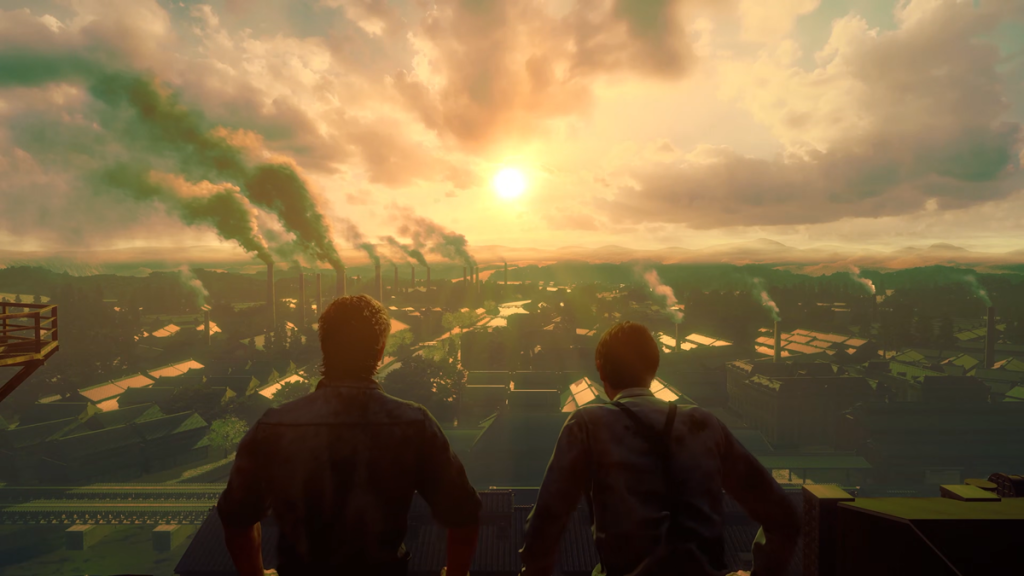
During our time with the game, we only got to experience a few stints of Daito’s journey across different parts of the game’s time periods, of which there are many. Stranger Than Heaven is split into five distinct periods of Japan, including Kokura, Fukuoka in 1915, Kure, Hiroshima in 1929, Minami, Osaka in 1943, Atami, Shizuoka in 1951, and Kamurocho, Tokyo in 1965. While it might seem like a lot to take in, the different eras of Japan actually act as a great break in the story, and a really smart way for RGG Studio to show just how quickly things can change in the world.
Although our time in each era was different, it’s clear each has a ton to offer. 1915 Fukuoka is as “early 20th century” as it gets, with dirt and stone roads, wooden homes, and tons of villagers out and about. Compare that to the game’s final era, 1965 Tokyo, when the streets are filled with cars, every building has vibrant and beautiful neon signage everywhere, and it’s incredible way to not only explore the past, but visualize just how far Daito will come throughout the game.
Each era of Japan also has a ton to do. Picking up odd jobs like helping chase away thieves from a lumber yard and learning how to roll tobacco with Snoop Dogg’s Orpheus (because what would a Snoop Dogg role be without a chance to roll up) to create your own custom cigarettes that do different effects are just some of what we got to do.
For Daito, though, the main story of Stranger Than Heaven is all about finding a home for himself, something he’s never been able to do. This includes finding the potential love of his life, but also includes finding brotherhood in the form of a burgeoning yakuza gang. Although our time doing story missions was short, it’s clear the gang will play a huge role in Daito’s story, and how he evolves throughout the years.
New Combat, Minigames, and More
Visual changes aren’t the only thing to experience in Stranger Than Heaven, though. In a first for the Like a Dragon series, the newest game features an entirely new combat system. Fighting has been a mainstay of the Like a Dragon franchise, and the series has long experimented with many ways to fight. Older games in the series like Yakuza 0 give players access to real-time brawling mechanics, while some other games use turn-based role-playing systems.
For Stranger Than Heaven, it’s all about balance. RGG Studio’s newest game features a two-handed combat system, with each side of the controller controlling a different side of Daito. On an Xbox controller, RB and RT will control the right arm and leg, while LB and LT control the left arm and leg. In that same vein, blocking is also done via independent body parts. In order to block a punch coming in from the right side of an enemy, you’ll need to time it up with the corresponding body part on the control.
Admittedly, this style of combat does take a bit to get used to. The first couple of fights I got into featured mostly button mashing, but once you get the hang of it, it is an incredibly interesting way to approach fighting in a game. You get more control over what you’re doing in any given fight, and countering becomes much more intuitive, allowing quicker counterattacks when taking on multiple enemies.
Rather than simply waiting for attacks to come in, you have to think on the fly, making every fight feel like its own unique encounter. Weapons and other items still appear in Stranger Than Heaven, though we didn’t get much time with them. Things like wooden clubs, swords, and other items can be utilized in a fight, and similarly used against you by enemies as well.
Enemy difficulty also feels pretty varied, with random encounters sometimes feeling like mini-boss fights in their own right, and especially at night, when sometimes “special” or harder enemies would appear to challenge you. Of course, Stranger Than Heaven has more to offer than just fighting. Minigames, a staple in the Like a Dragon series, are back yet again, and never fall out of style no matter what era of Japan you find yourself in.
In our brief time with the game, we got to check out a handful of minigames. These range from traditional card games and cee-lo (dice) to a game that’s Beyblade in all but name, and tasks players with defeating opponents using differently weighted spinning tops. All were fun, and the flair of the minigames leads into one of the biggest aspects of Stranger Than Heaven, it’s focus on show business.
It’s All About the Showbiz
Like other Like a Dragon entries, Stranger Than Heaven is about more than just being a gang member. Unlike past entries that feature some fun odd jobs here and there, Stranger Than Heaven has a strong focus on the world of showbiz, and how it not only shapes the game, but Daito’s abilities, as well.
In the game, as Daito continues his rise through Japan, he’ll do so by becoming a major player in the world of show business. To do this, Daito will use his ear to help craft music, almost literally. Throughout the game, players will encounter tiny floating orbs that, when examined by Daito, will reveal a unique sound to him. This can be something as innocuous as someone banging a pot, to something like a crow cawing or water rippling across the rocks.
As Daito finds more and more sounds, he’ll be able to use them to craft different takes on popular songs in the game. Tweaking a slower song to include some harder hitting drums, or taking an up-tempo song and adding in some slow jazz are all options here. When it’s time to put on a show, players can choose a setlist, select which singers and musicians perform, and even add flair like lighting, bubbles, or more (all for a cost, of course).
When it comes time to perform, the game lets players experience that, too. The show gets underway, and players must then “perform” by pressing corresponding buttons at the right time. Each timely hit earns you an extra bonus, and when the show ends, you’ll see whether you made enough money to turn a profit. It’s a neat feature overall that looks to be much more fully fleshed out than we got the chance to see, with RGG Studio hinting that it plays a major role in the game’s story, to boot.
Stranger Than Heaven Preview: Final Verdict
The Like a Dragon series has often broken the mold throughout its history. It’s also never been afraid to lean into the wacky and weird side of video games, even when managing to cover some of the most serious and heartfelt topics in its many entries.
In our brief time with Stranger Than Heaven, that trend seems to continue. The game offers up the chance to dive into a time period never explored before in the series, and also see the rise of not only the game’s most iconic gang, but the country it resides in at the same time.
Despite these serious overtones, Stranger Than Heaven also includes some downright fun and hilarious bits. The game’s devotion to the world of show business, flashy style, and over-the-top characters strikes the exact balance, all the while the game hopes to offer up a heartfelt story about striving to find a home to call your own, and from the early looks of it, it will be a must-see experience.
The post Stranger Than Heaven Preview: A Brand New Era for Yakuza appeared first on ComingSoon.net – Movie Trailers, TV & Streaming News, and More.