The video games that are the most memorable tend to be either super, super good, equally terrible, or just as unique. Gamers often complain that the industry is losing creativity, seemingly letting it fall by the wayside in favor of pumping out profitable, “safe” sequels. Unique ideas, then, are almost always welcomed, even if they sound just a little silly.
6 Best Video Game Genres AAA Studios Don’t Make Like They Used To
From Guitar Hero’s plastic instruments to Metal Slug’s run-and-gun chaos, these mostly-abandoned video game genres once ruled arcades and consoles.
It’s easy to dismiss a title just because the premise sounds stupid, but, as always, being open-minded can really pay off. Each of these games had some very experimental ideas, but formed them into solid, enjoyable games that surely surprised many once they decided to actually play them.
Untitled Goose Game
We Already Knew Not To Mess With Geese
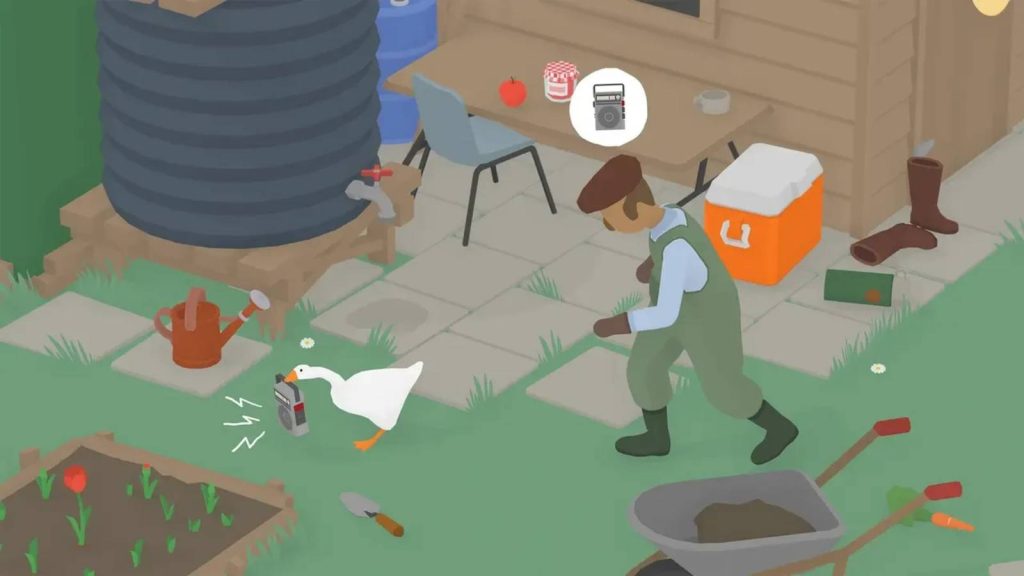
The danger with a title like Untitled Goose Game is that you can take the absurdity too far. The intentional jankiness of the Goat Simulator games, for instance, made it very funny at first, but some have found the novelty wearing off quickly, and the whole thing fairly unsubstantial. There’s more to House House’s goose-em-up than that, and it’s all the better for it. Taking the role of a mischievous goose in a small town, your broader goal is to pester the locals. There’s also some structure in the shape of specific objectives on a to-do list, but players are generally just told what they are and not how to achieve them.
This leads to experimentation with all kinds of objects in the environments, to determine whether there’s something to be stolen, an unguarded door to go running through, or similar. In parts, it’s like a puzzle game, where you survey the goose’s surroundings and the items and people in the area before trying to determine how to achieve the necessary result. The main story can be completed in around 3 hours, according to How Long To Beat, but hunting the optional objectives beyond that will double your playtime. Not bad for what looked like a silly gimmick of a game (it has a set button command that simply makes the goose honk).
The Pikmin Series
Capturing The Heart Like No RTS Before Or Since
Nintendo seems to love introducing its own unique versions of existing genres. In the RTS arena, the Pikmin series is the Japanese giant’s effort, and true to form, there’s a whimsical charm and family-friendly vibe to the games that has been present since the original arrived on the GameCube in 2001. The premise is that a tiny spacefarer crashes his ship on a planet inhabited by similarly tiny planet-creatures he names Pikmin. He cultivates them, and they merrily serve him, fighting foes, carrying loot, and solving puzzles together.

8 Best Strategy Games That Reward Teamwork, Ranked
These already great strategy games feature layered mechanics that reward teamwork, greatly improving the strategic experience.
Playable characters, Pikmin types, and planetary settings have changed several times over the course of the series to date, but that’s still the core of the games. The original announcement may have given those old enough to remember a bit of a “what’s Nintendo doing now?” feeling, but there’s no doubt that the franchise has made a name for itself for its unique creature design, accessible yet diverse gameplay, and the Pikmin themselves, who have become utterly beloved. If you’re a newcomer to strategy games, this could be just the sort of title for you.
Superhot
A Whole New Take On Bullet Time
Superhot is visually arresting indeed. The contrast of those plain, clinical environments with the colors of enemies and weapons is extraordinary to look at, and even more so in motion. On that note, movement is the key to the major feature that sets Superhot apart. All foes move super slowly around the stages, only ramping things up to a normal speed when the player moves or shoots. Manipulating the passage of time is far from a new concept in games, but it was difficult to see how it would translate into an FPS in this curious way.
The game’s story helps to demonstrate its potential and uses, but it’s in the survival mode that Superhot shines brightest. It’s just you, an endless parade of foes, and one of the most fascinating mechanics ever to hit an FPS. There’s a peculiar beauty about the start-and-stop rhythm of play, in which you might defeat a foe, catch their falling weapon, use it to dispatch the next one, then find another, and so on, always paying attention to their return shots and how slowly (then not-slowly then slowly again) they’re traveling towards you. I questioned how this mechanic would really work, and was delighted to be proven wrong.
Boktai: The Sun Is In Your Hand
Silver For Werewolves, Solar For Vampires
It’s difficult to make it through a rundown of experimental games without one of Hideo Kojima’s creations showing up. The man loves to surprise, confuse, and create, and he certainly did all that in the course of producing Boktai: The Sun Is In Your Hand. This 2003 Game Boy Advance title was one of the most outlandish games on the system, an action RPG in which vampire-hunting prodigy Django must slay an onslaught of Immortals in order to save the planet.

The Best RPGs On Game Boy Advance, Ranked
The Game Boy Advance had some of the best RPGs of its era in its library. These are the best you can play on the console.
He’s equipped with the iconic weapon that is the Gun Del Sol, which needs to be kept stocked with sunlight. Literally, in fact, because a sensor in the cartridge detects when the system is in the sunlight and refills your ammo stocks accordingly. There are limited ways outside of that to recharge your weapon, making the mechanic absolutely central to the gameplay. I was concerned that this would be a wacky, impractical Kojima gimmick, but it actually increased the immersion of the dungeon areas for me. A franchise evolved around it, powering the original game to cult classic status.
The Stanley Parable
The Exciting Adventures Of Employee 427
While a lot of popular games minimize storytelling (or leave it by the wayside entirely) in favor of action, The Stanley Parable takes the opposite approach. The titular Stanley is a nondescript worker in an office building, which he explores in first-person guided by the dulcet tones of Kevan Brighting. All of his colleagues have seemingly left, it seems, and he’s unsure what to do without any instruction from management.
It looks like a rather simple experience, though one with some very well-written and delivered dialogue from Brighting. It’s also very brief in terms of a one-off playthrough, taking perhaps two hours to finish if you’re taking it slowly. When you play, though, you quickly realize that there’s much more to this one than you may have thought. The Stanley Parable is a game that rewards curious, experimental play, and the more you put into it, the more it’ll offer you. Some of the available branching paths take off in entirely different directions and can cross over depending on your choices.
The ultimate fate of Stanley and the wider world around him is up to you, and the myriad ways in which you can mess with the Narrator’s narrative on the way to reaching that conclusion are fascinating to behold. As a result of all this, it’s very difficult to resist jumping straight back in with a fresh playthrough and making different choices at particular points, to see the wider impact it has. There are a lot of different endings, all very worth experiencing.

Severance: Exploring Parallels With The Stanley Parable
The office-set Severance and The Stanley Parable tread similar dystopian territory, but with a few key differences.